


What’s the fastest way to learn how to tell a story? I’m talking Matrix-style, plug me in and I know Kung Fu. The answer I found is this gem from Trey Parker and Matt Stone, creators of South Park. It tells you everything you need to know in 2 minutes.
I’ve literally shown this video to an Academy Award nominated director. I use it all the time. When I’m assembling sequences, I always run through the but/therefore logic, or “but/so” as I call it. If I can’t figure out the but/so link between two scenes, something is wrong and needs attention.
While editing Bad Press, editor Jean Rheem and I would sit in the edit bay and tell each other the entire story with a “but” or a “so” between each sentence just to make sure everything flowed. Mike Nichols would do something similar with Elaine May on the set of Primary Colors.1 They would tell each other the story and if they couldn’t remember what came next, they knew that section needed work.2
Remember when I said this video will tell you everything you need to know? Well, I lied. It won’t tell you everything, but it does give you a north star and a strong compass. Is that a mixed metaphor? Whatever, I’ve clearly never been outside.
When trying to tell a story in movie-form, there are, of course, countless screenwriting books ranging from the extremely prescriptive to the extremely helpful. Then there’s generation-defining books on playwriting. And we can’t forget Walter Murch’s ur-text on editing itself (well, actually, this one is more the ur-text). But all of these really only cover western, three-act structure, so you better brush up on your four-act structure (Bro, you’ve never heard of Ki Sho Ten Ketsu?).
All of these resources are great, but they can be daunting. Trying to Neo all of this stuff into your brain before you start to tell your story is an impossibly high bar for anyone. And unless you’re a psychopath like me, it’s also probably pretty boring.
The simple but/so rule is a great place to start and is so foundational that none of the other stuff will work without it. You can read every one of those craft books, but if you’re not following the but/so rule your movie is still going to be boring as hell.
The one upside to filmmakers ignoring this rule is that it resulted in my favorite Onion headline:
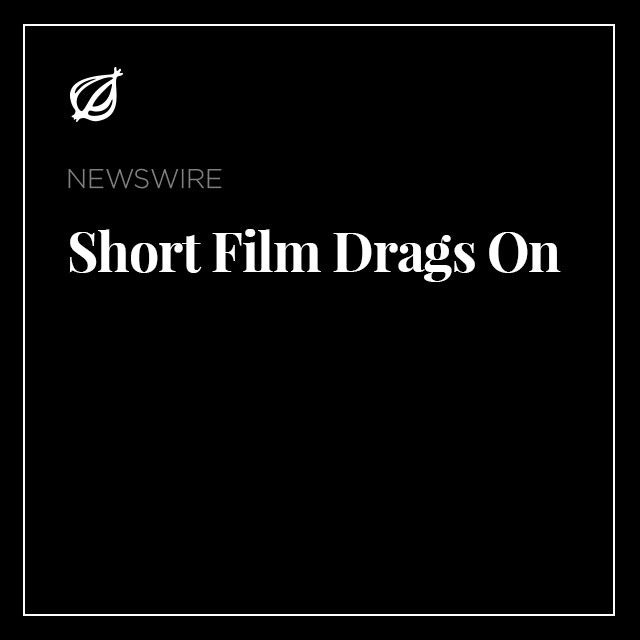
A classic, but don’t let it be you.
Joe Peeler is a Sundance award-winning director and editor who writes about the art of making movies from the lens of film editing.
SPLICE WORLD. The world of movies, y’know, spliced.
Or was it The Birdcage? Read the great Mike Nichols: A Life by Mark Harris.
Even more “arthouse” filmmakers utilize this. I’ve done this exercise with the films of everyone from David Lynch to Hou Hsiao-Hsien to Belá Tarr. Sometimes the logic is more subtle or internal than, say, watching a Michael Bay movie, but it’s there.