


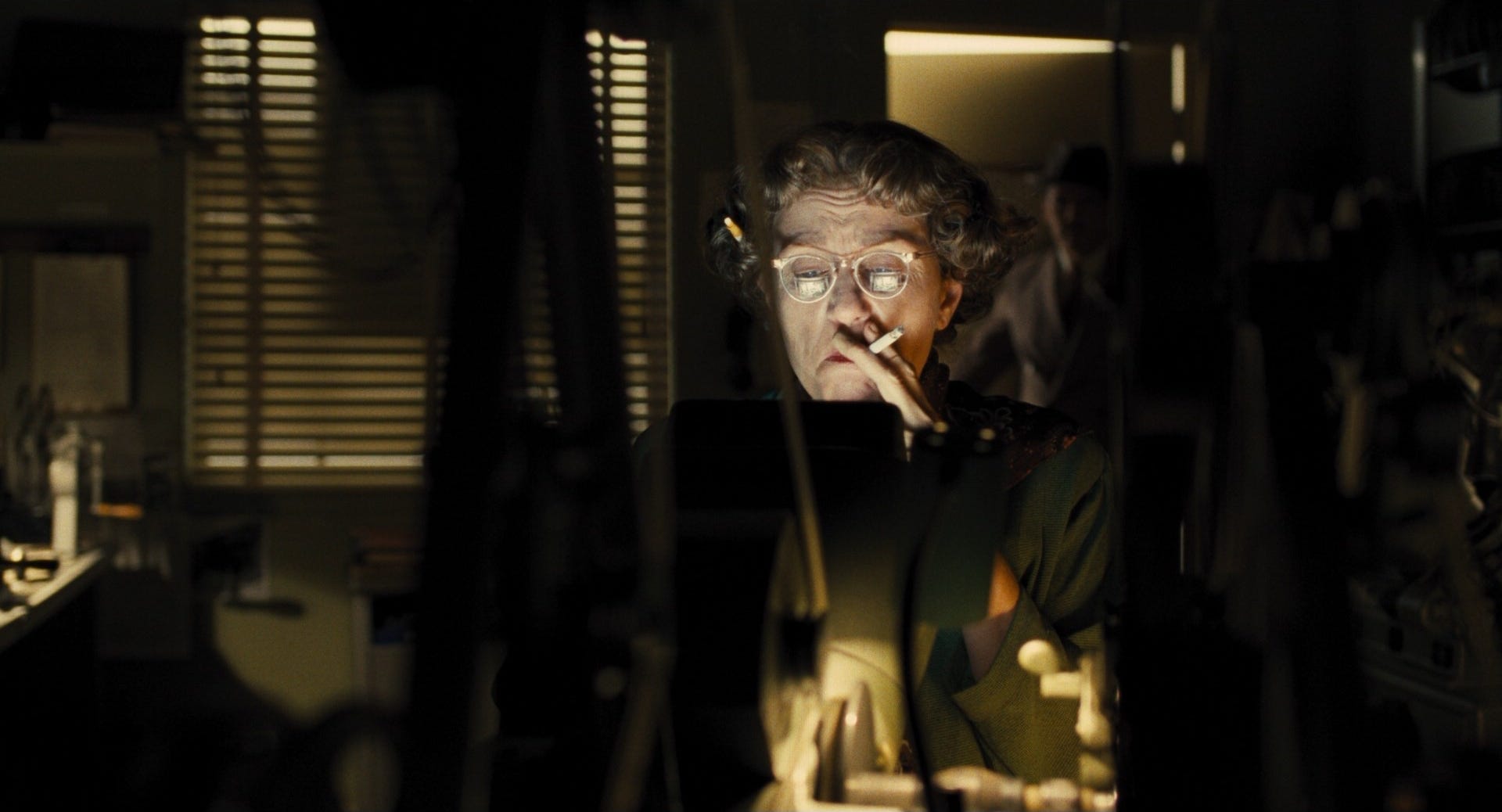
Walter Murch gives the most concise description of being an editor I’ve ever heard:
“Your job is partly to anticipate, partly to control the thought processes of the audience. To give them what they want and/or what they need just before they have to “ask” for it - to be surprising yet self-evident at the same time."1
But in the immortal words of Hobie Doyle, “Would that it were so simple.”
Being an editor also means you’re [deep breath] a therapist, a writer, an uncredited co-director, tech support, emotional support, a baby killer, detail oriented, a big-picture thinker, the director’s assistant, the director’s director, completely open to feedback, ready to tell everyone to fuck off, extremely patient, able to work fast under pressure, a butcher, a poet, a politician and a therapist again. And that’s on a good day.
On the creative side, an editor’s job is to sculpt the best possible version of a story from hours and hours of raw material. On the political side, an editor’s job is to then shuttle that version, the version worth believing in, through the gauntlet of opinions, egos, insecurities, corporate interests and any number of individuals out to murder the best version of the film. You create it, then you protect it as best you can in the hope that its shape will slide perfectly into the audience’s earholes and eyeballs.
Director Neil LaBute taps into the romanticism of the edit bay:
“…you spend six months hunched together in a darkened box… you and your editor fashion something new and fresh from a pile of celluloid. Without question, it is here that I now feel that one's real film is born.”2
And it is romantic: dimly lit, intimate, pulling a million unformed ideas, hopes and questions into the swirl of two orbiting creative minds until a unity, a rhythm, is mutually discovered and the “real film is born.” All previous versions are incomplete, embryonic, unreal.
A good director will fight alongside you to shuttle the “real film” through the gauntlet. Think of George Miller and Margaret Sixel simultaneously screening competing versions of Mad Max: Fury Road - their cut versus the studio’s cut - to two different test audiences. They took what they liked from the studio’s cut and implemented it into their own, and the film is better for it. Or Mel Brooks’s response to any executive with a note - “Of course! You’re a genius! We’ll get right on it!” - before promptly throwing it in the trash.
To describe this marriage, I use the very unromantic analogy of bowling alley bumpers. The editor and director both have hands on the bowling ball, and both want to throw a strike. It takes finesse, trust, and synchronicity to throw the ball down the lane together. Once it gets rolling, an editor acts as one bumper and the director acts as the other. Ideally, you bounce the ball back and forth until you get a strike.
But sometimes you get a 7-10 split. Director Sidney Lumet puts it bluntly:
"While it's absurd to believe that pictures are 'made' in the cutting room, they sure as hell can be ruined there."3
I don’t disagree with him, but both are true. The editor occupies a dual role as magician and plumber. At best, the editor’s job is to ask “How can I make this great?” But 99% of the time the question becomes “How can I make this work?”
Like any good atheist, I allow myself the occasional belief in a higher power. And I do believe that there is one “real film” sealed Jurassic Park-style inside the DNA of every amber block of raw footage waiting to be excavated by one or two pale, unshowered hermits armed only with their wits and an IV-tap of cold brew. If the weather is just right and the stars align, you may discover something akin to magic.
As I head off in search of that magic, I’ll leave the last words to C.C. Calhoun:
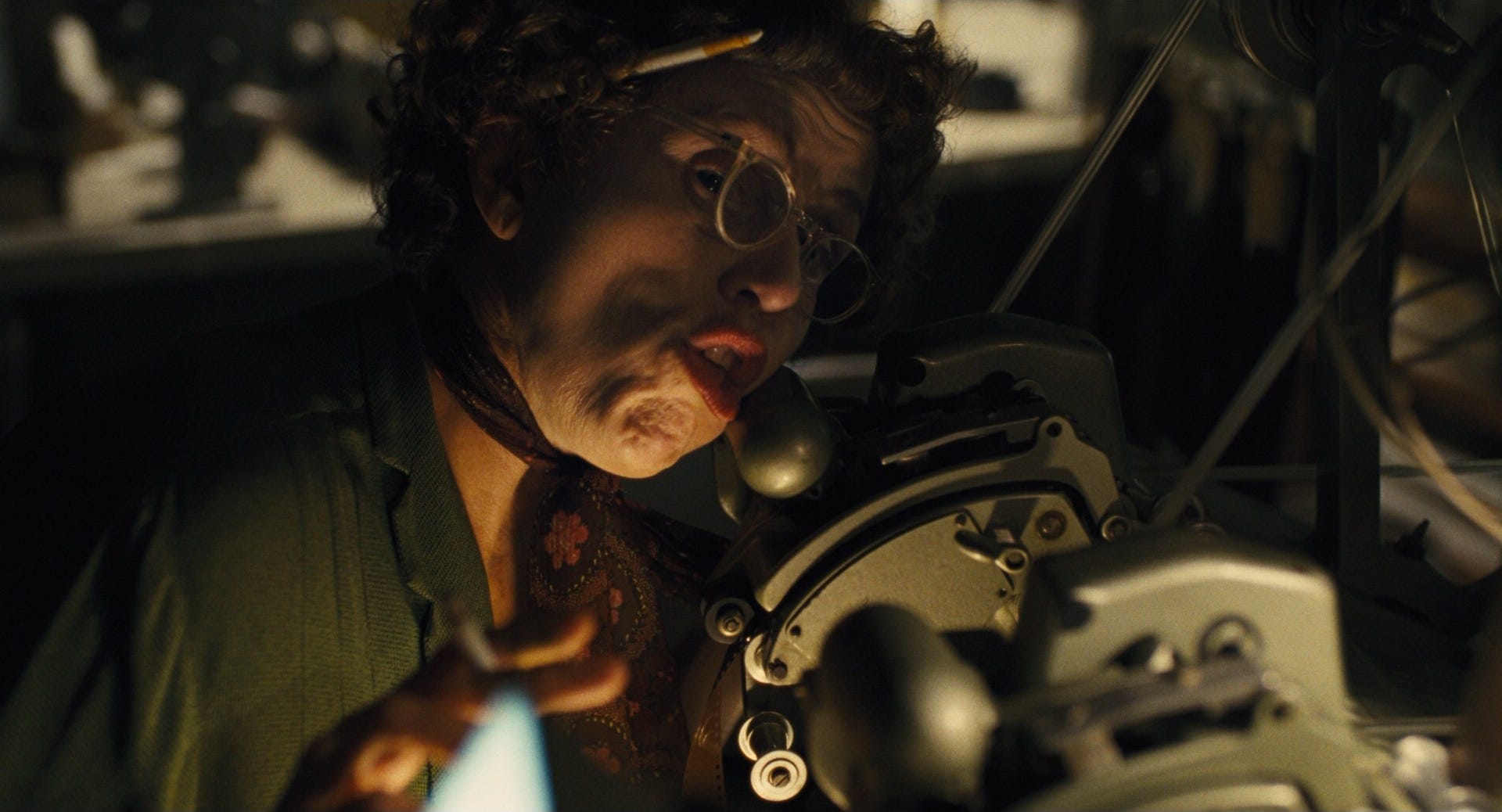
Never wear scarves in the edit bay.
Joe Peeler is a Sundance award-winning director and editor who writes about the art of making movies from the lens of film editing.
SPLICE WORLD. The world of movies, y’know, spliced.
In the Blink of an Eye by Walter Murch.
All About Me! by Mel Brooks.
Making Movies by Sidney Lumet.